Suche

You are here
ZESS Lectures: Recent Advances in Machine Learning
Semester:
Summer Term 2019
Place/Time:
Thursdays, 14:15 - 15:45 in H-C 7326, Fridays 12:15 - 13:45 in H-F 112
SWS/LP:
4 SWS, 5 LPs
Recommended for:
Master students in informatics and mechatronics interested in Machine Learning
Conditions:
Prior knowledge in programming, basic mathematics, and machine learning, where the latter can be gained from different modules including statistical learning theory, artificial inteligence, or deep learning
News:
Course material is now ready to be downloaded here.
IMPORTANT: On Thursday April 18th, the lecture will be in room H-A 7118! It will be an introduction to PyTorch given by Hartmut Bauermeister. Please make sure to familiarize yourself with basics of NumPy in preparation for this class.
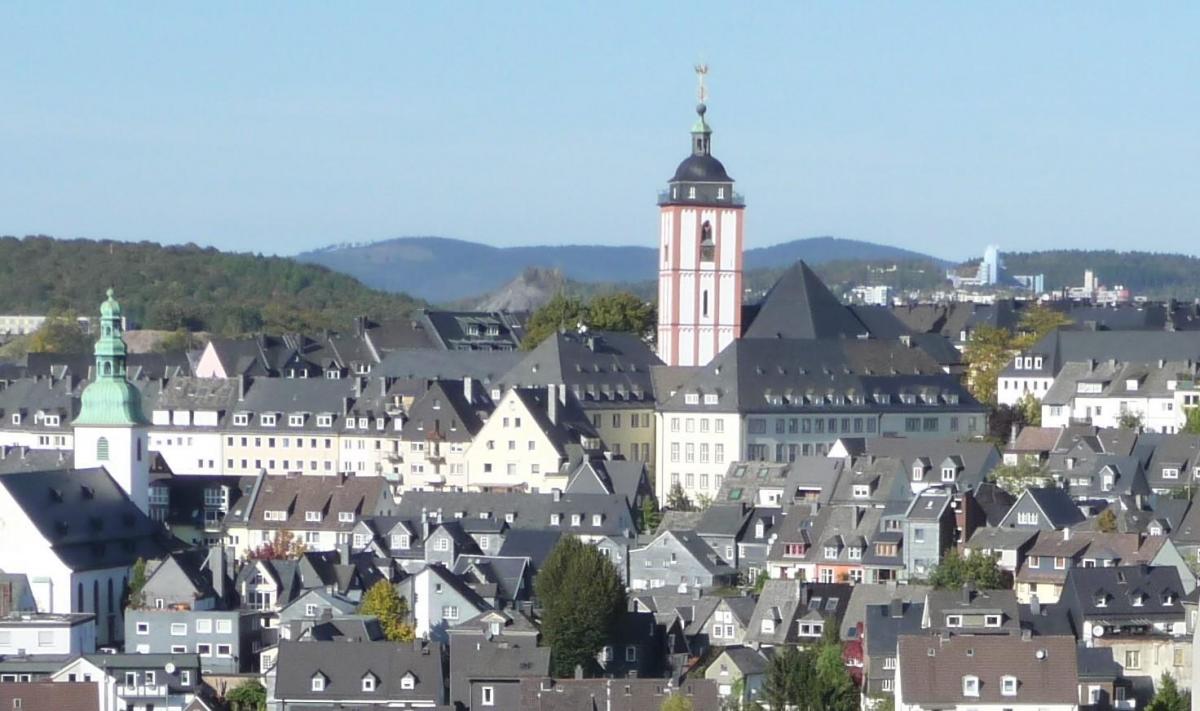

Turning Siegen into a painting - generated with https://deepart.io - based on the 2015 deep learning publication https://arxiv.org/abs/1508.06576
This module will present recent advances in machine learning in different fields of data sciences including imaging, vision, graphics, mechatronics, and sensorics. It addresses advanced techniques in the fields of machine learning, deep learning and artificial intelligence, with a particular focus on recent research papers, novel application areas and open questions in the aforementioned fields. Based on basic prior knowledge gained in other courses, this module specifically focuses on the state-of-the-art in machine learning by introducing recent publications from the leading international conferences on machine learning (e.g. NeurIPS, ICML, ICLR), computer vision (e.g. CVPR, ICCV, ECCV), or their application in fields like computer graphics, 3d reconstruction, robotics, navigation, medicine, or body-worn sensorics. After covering the theory of such works in the first half of the semester, a project phase will ask every student to implement and apply one of the discussed techniques on their own in one of the leading machine learning frameworks in the second half of the semester. The results of the project phase need to be presented to the class, and a short final report on the project will be the courses examination.
This will be an exciting interdisciplinary lecture for advanced master students from mechatronics and computer science! We have 6 different lecturers from the center for sensor systems (ZESS) each of which will present a specific recent machine learning related research topic from his field, and offer a related project. Our lecturers are
- Prof. Hubert Roth, Control Engineering, who will present deep learning in robotics - applications, challenges and potentials!
- Prof. Kristof Van Laerhoven, Ubiquitous Computing, who will present Activity Recognition and Time Series Analysis with Convolutional Neural Networks!
Abstract: Nowadays, deep learning methods are not only used for image or text data. Especially in the last years, some exciting papers have been published, which focus on the application of neural networks to classify time series data from inertial measurement units. These inertial sensors are typically embedded in wearable devices (watches, fitness devices, smart glasses, etc.) and include 3D accelerometer, gyroscope and magnetometer sensors.
In this lecture we would like to demonstrate the handling of time series data and convolutional neural networks in particular. Here is an example from our research:

- Prof. Volker Blanz, Media Computer Science, who will present deep learning techniques with applications in visual computing and perception!
- Prof. Otmar Loffeld and Dr. Miguel Heredia Conde, Communications Engineering and Signal Processing, will present machine learning approaches for SAR imaging and Compressed Sensing.
- Dr. Paramanand Chandramouli, Computer Graphics, who will present Deep Learning techniques for Computational Photography!
- Prof. Michael Möller, Visual Scene Analysis, who will present approaches for fusing learning and model based reconstruction techniques.
More details are to follow!
Let's make sensing smart!